
Many of us hold a quiet hope that one day, we’ll finally arrive, that we’ll find a place, a relationship, or a version of ourselves that feels completely like home.

But for people who have lived between worlds, that sense of home can feel just out of reach.

You might recognize yourself in that experience if:

       – You grew up moving between cultures or countries.

       – You’re an adoptee searching for a sense of origin or identity.

       – You’re a helping professional who spends your days caring for others but feels emotionally unmoored yourself.

       – You’ve gone through big transitions  (divorce, relocation, loss) that left you unsure where you belong.

At Horizon Online Therapy, we often work with clients who describe this feeling: “I should feel at home by now, but I don’t.” Therapy can be a space to explore that and to build a new kind of home from the inside out.


Why homecoming can feel complicated

For people living between worlds, belonging isn’t always straightforward.

       – You may love your family and still feel unseen by them.

       – You may return to a familiar place and feel like a visitor.

       – You may have created a stable life and still feel like part of you is missing.

That’s because “home” isn’t only about where we live, it’s about where our nervous system feels safe.

When you’ve experienced trauma, chronic stress, adoption, or cultural dislocation, your body learns to stay on alert. You might be physically home but emotionally scanning for danger. Over time, that vigilance becomes exhausting.

Therapy can help you recognize and unlearn that pattern, allowing the body and mind to rest.

How Therapy Helps You Feel at Home in Yourself

How therapy supports a sense of belonging

Belonging begins with safety. Not in the abstract: in the body.

Through trauma-informed approaches such as EMDR, mindfulness, and somatic regulation, our therapists help clients gently reconnect with that sense of inner steadiness.

You might begin to notice moments like:

       – Taking a full breath for the first time in a long while.

       – Feeling grounded in your body instead of detached or tense.

       – Recognizing that your emotions make sense in the context of your story.

       – Understanding that you can be part of multiple worlds — and still be whole.

These are small but powerful markers of homecoming.


The paradox of belonging

People who live between worlds often become experts at empathy.

You might sense what others need, adapt easily, or mediate conflict effortlessly.

These are strengths, but they can also lead to losing track of your own needs.

In therapy, we explore how to stay connected to others without abandoning yourself.

Belonging doesn’t have to mean choosing one identity over another; it can mean holding multiple truths at once.

At home within yourself

Rebuilding home from the inside out

At Horizon Online Therapy, our clinicians work with clients across Oregon who are ready to stop chasing the “perfect” homecoming and start creating safety within themselves.

We use approaches like:

     – EMDR (Eye Movement Desensitization and Reprocessing) to heal past experiences that still feel unfinished.

     – Narrative Therapy to make sense of who you are and challenge old beliefs about worth and belonging.

     – Mindfulness and somatic tools to calm the nervous system and reconnect with the body.

You don’t have to do it alone and you don’t have to find a single “place” to belong.

Homecoming can be a gradual process of learning that you are already allowed to arrive.

Therapy across Oregon — wherever you are

Because our work is entirely online, you can access therapy anywhere in Oregon, from Portland to Eugene, Salem to rural communities that often lack access to in-person care.

If you’ve been longing to feel more grounded, understood, or at peace with your own story, we can help.

Our therapists specialize in trauma, identity, adoption, multicultural stress, and belonging.

Begin your homecoming today

You don’t need to have it all figured out before reaching out.

Sometimes, the first step toward belonging is simply being heard.

Schedule a free consultation to learn how therapy at Horizon can help you come home to yourself. One breath, one story, one moment at a time.
Finding Yourself When You’ve Always Lived Between Worlds

Many people grow up feeling that they don’t fully belong anywhere, caught between cultures, languages, families, or life experiences. You might wonder: Who am I, really, when every place I’ve been has shaped me in a different way?

At Horizon Online Therapy, we specialize in helping people explore questions of identity, belonging, and self-understanding, especially when those experiences are layered by adoption, migration, mixed heritage, or complex family stories.

We believe that belonging is not something you earn; it’s something you cultivate by understanding and honoring your own story.

When Identity Feels Complicated

You might be seeking therapy because you:

     – Feel disconnected or “between worlds”, culturally, racially, or linguistically.

     – Have a history of adoption and are exploring your story, roots, or attachment experiences.

     – Struggle to balance different cultural or family expectations.

     – Feel invisible, misunderstood, or like you have to “code-switch” to fit in.

     – Notice feelings of shame or loss when it comes to your background or sense of self.

     – Want to feel grounded in who you are, even when others don’t understand your experience.

Therapy can offer a space to make sense of these experiences and find language for the parts of you that have never had words.

How Therapy Helps You Reconnect with Yourself

Our approach integrates evidence-based modalities with a deep respect for lived experience and cultural context.

Depending on your goals, sessions may include:

     – Narrative and trauma-informed therapy to help you explore your story and make sense of your past.

     – EMDR therapy to process memories that still carry emotional charge or feelings of disconnection.

     – Mindfulness and somatic approaches to help your body feel safer in belonging.

     – Attachment-based work to explore patterns of closeness, trust, and safety in relationships.

     – Culturally responsive therapy that honors your background, values, and multiple identities.

Through this work, many clients begin to feel less fragmented, more self-accepting, and able to carry their complexity with confidence rather than confusion.

Our Clinicians’ Experience

Each therapist at Horizon Online Therapy brings a different lens to identity and belonging work:

     – Alex De Araujo Sanchez, LCSW — specializes in adoptees, multicultural and multiracial individuals, and those navigating identity reconstruction after trauma or migration.

     – Tenaya Meaux, LCSW — supports LGBTQ2A+ individuals, perfectionists, and those exploring identity through self-acceptance and nervous-system healing.

     – Rachel Boll, LPC — integrates EMDR, mindfulness, and somatic therapy for clients exploring life transitions, self-worth, and belonging.

We provide therapy for adults across Oregon, fully online, in a space designed to feel safe, grounded, and culturally aware.

What You Can Expect

In therapy, we’ll slow down and explore:

     – How your background, experiences, and relationships have shaped your identity.

     – Where belonging has felt possible — and where it hasn’t.

     – How to develop compassion for the different parts of yourself.

     – How to connect with your roots, values, and the communities that feel most aligned.

Therapy becomes not only about healing what hurt, but about reclaiming the right to belong to yourself.

Getting Started

You don’t have to have all the answers. You only need curiosity about your story and a desire for connection.

Reach out today to schedule a free consultation and learn how therapy can help you find your place between worlds.

Further readings:

     – National Alliance on Mental Illness (NAMI): Identity and Culture

     – Mental Health America: Culture, Identity, and Mental Health

     – The Adoptee Collective — community and advocacy resources for adoptees.

     – Harvard Center for the Developing Child: The Science of Belonging


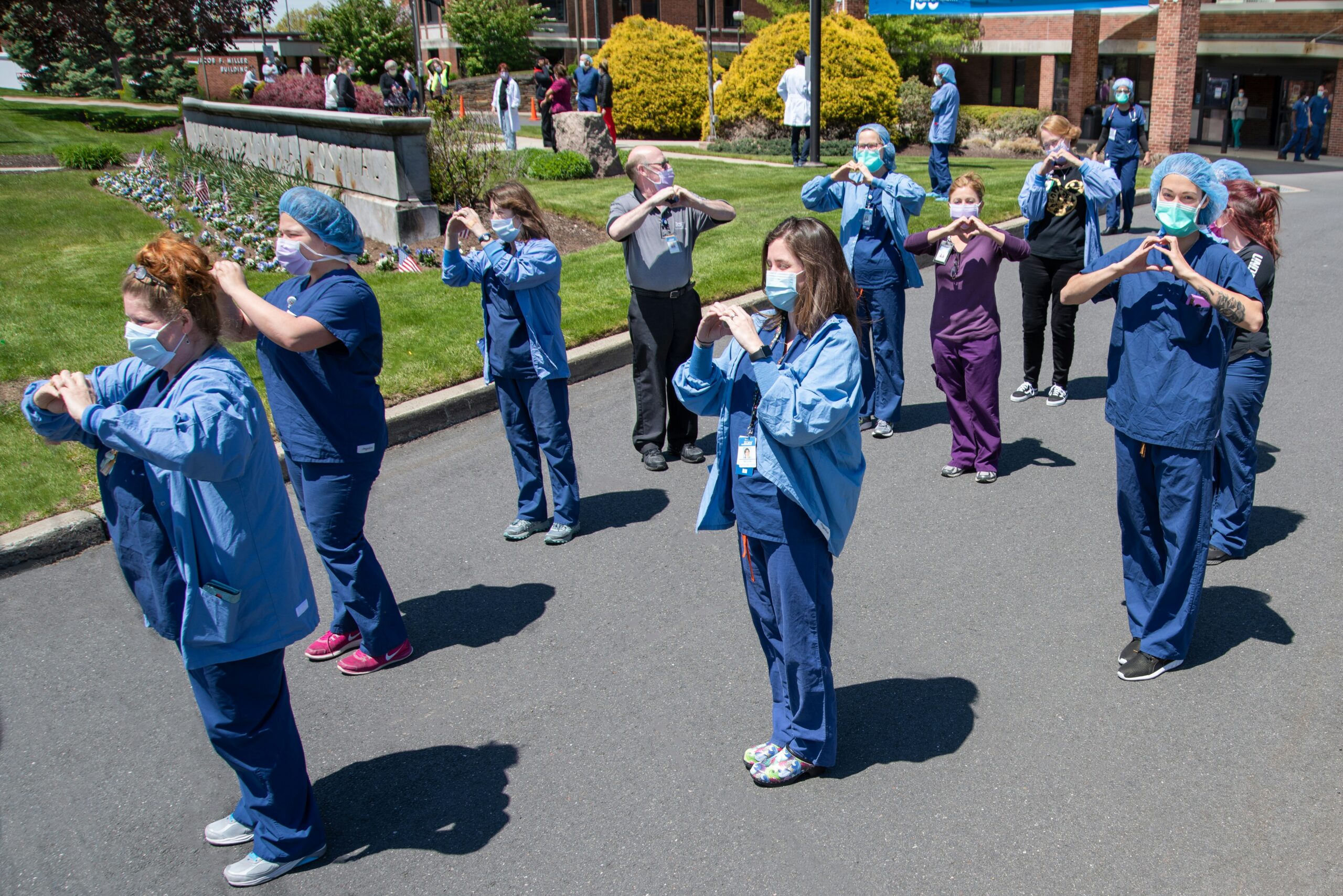
Medical providers, healers, caregivers know too well the cost of caring.

The long shifts, the endless charting, the quiet pressure to hold everyone else’s pain without faltering. For many, the white coat becomes both a shield and a weight, a reminder of the promise to heal others, even when their own well-being has been quietly unraveling.

The Medscape Physician Suicide Reports regularly brought this into painful clarity. Physicians in family medicine, obstetrics-gynecology, and psychiatry reported some of the highest rates of suicidal thoughts across all specialties. The numbers are alarming , but not surprising. They echo what many in medicine already know but rarely say aloud: to practice medicine often means to live between worlds: between resilience and collapse, empathy and depletion, duty and despair.

The slow unraveling of burnout

Burnout doesn’t announce itself in a single moment.

It builds gradually, disguised as competence. Staying late, finishing one more note, answering one more message before sleep.

The system rewards endurance, not presence. But over time, endurance becomes emptiness.

Many of my clients describe it as a kind of fading, a dulling of color and connection.

What began as vocation turns into survival.

And the body, always faithful, begins to signal what the mind tries to ignore: you can’t keep carrying this alone.

Therapy for medical providers

When healers forget they’re human

To be a healer is to live inside a paradox: you’re trained to recognize suffering in others but conditioned to minimize your own.

Even asking for help can feel like failure. An unwelcome reminder that providers are not immune to the same fragility they tend.

But you are human before you are a healer.

And the parts of you that ache, that tire, that need rest, those are not weaknesses to overcome; they are thresholds calling you back to balance.

The quiet rebellion of self-preservation

Caring for yourself is not indulgence. It’s quiet resistance against a system that teaches self-erasure as professionalism.

Healing for physicians often begins with permission — to pause, to grieve, to not know, to reconnect with the parts of yourself that exist outside of patient charts and on-call schedules.

It can look like:

     – Remembering your body, not just your role.

     – Allowing space for hobbies, silence, and genuine rest.

     – Reclaiming community. Not only among colleagues. Mostly in spaces where you can speak freely about what medicine takes and gives.

     – Reaching out for therapy or peer support, not as crisis management but as maintenance of humanity.

Between two worlds

Caregivers live between worlds: between care and exhaustion, science and soul, precision and vulnerability.

They inhabit the tension between being the helper and being in need of help.

This space, though painful, can also be fertile. It’s where empathy deepens, where humility grows, and where many discover the kind of healing that transcends clinical language.

To heal others well, you must also learn to belong again to yourself.

A note to those who care for others

If you find yourself living in this in-between, the healer who feels empty, the caretaker who has no time to care, know that there is another way to practice wholeness.

At Horizon Online Therapy, we work with physicians, nurses, therapists, and healing professionals who are ready to rediscover the human beneath the role.

Schedule a free consultation to learn how therapy at Horizon can help you come home to yourself — one breath, one story, one moment at a time.

March 15, 2023

Alex

Uncategorized

Being adopted means learning to live between stories.

But for transracial adoptees that, in-between often includes something visible, something the world names before you do.

You don’t need anyone to tell you that growing up with a different skin tone than your family can complicate what it means to belong. You live it every day: in mirrors, in photographs, in the weird tension between gratitude and loss.

The layers of belonging

For adoptive parent, transracial adoption can feel like an act of love. Yet it’s essentially an act that reshapes identity.

It asks a child to build a sense of self within a family and culture that may never fully reflect them.

Many adoptees grow up surrounded by kindness but not by likeness. They may be the only one who looks like them in the room, the school, the family portrait. That absence (of shared features, of cultural cues) isn’t superficial. It shapes how the nervous system learns safety, how identity forms, and how long it takes to feel at home in one’s own skin.

When love isn’t enough

Sometimes racism comes from outside, in the eyes of strangers, in offhand comments.

Sometimes, painfully, it comes from within the family itself: a relative’s discomfort, a silence that cuts too deep, a refusal to see color when color has always been seen by everyone else.

Love can coexist with ignorance. But healing requires more. It calls for curiosity, humility, and a special willingness to witness what’s hard to face

The pull of two worlds

My transracial adoptee clients often describe a quiet homesickness. Not only for birth families or origins, but for a culture they were told was theirs to forget.

They navigate two expectations: to integrate fully into one world while honoring a heritage they barely know. Masking and grief become twin languages.

Belonging, then, becomes a practice of translation between who you were, who you became, and who you are still becoming.

What healing can look like

Healing doesn’t mean erasing the tension between those worlds. It means learning to hold them both without disappearing.

It can look like:

  • Seeking community where your features are mirrored and your story understood.

  • Naming your experiences out loud, in therapy, in writing, in conversation, without shrinking them to make others comfortable.

  • Allowing anger, pride, and longing to coexist.

You don’t have to resolve the contradiction to find peace. You only need spaces (and people) that let you arrive as you are.

A note for adoptive families

Transracial adoption asks parents to become cultural learners, not color-blind saviors.

It means raising a child in a way that honors where they come from, not just where they’ve landed.

It means preparing your circle (extended family, friends, schools, etc.) to love a child whose experience of the world will never be identical to yours.

Adoption is not the end of a story and the beginning of a new one. It’s the constant weaving of many intersecting ones.

Coming home

For transracial adoptees, home may never be one fixed place.

It may be a series of moments like the sound of a language you don’t speak but still recognize, the warmth of someone who looks like you, the mirror where you finally see not a contradiction but a whole person.

Belonging isn’t a perfect fit. It’s a gentle return to yourself. One that keeps unfolding, again and again.

If you’re ready to explore your own story of identity and belonging, we’re here to walk beside you.


Schedule a free consultation to learn how therapy at Horizon Online Therapy can help you come home to yourself, one breath, one story, one moment at a time.